


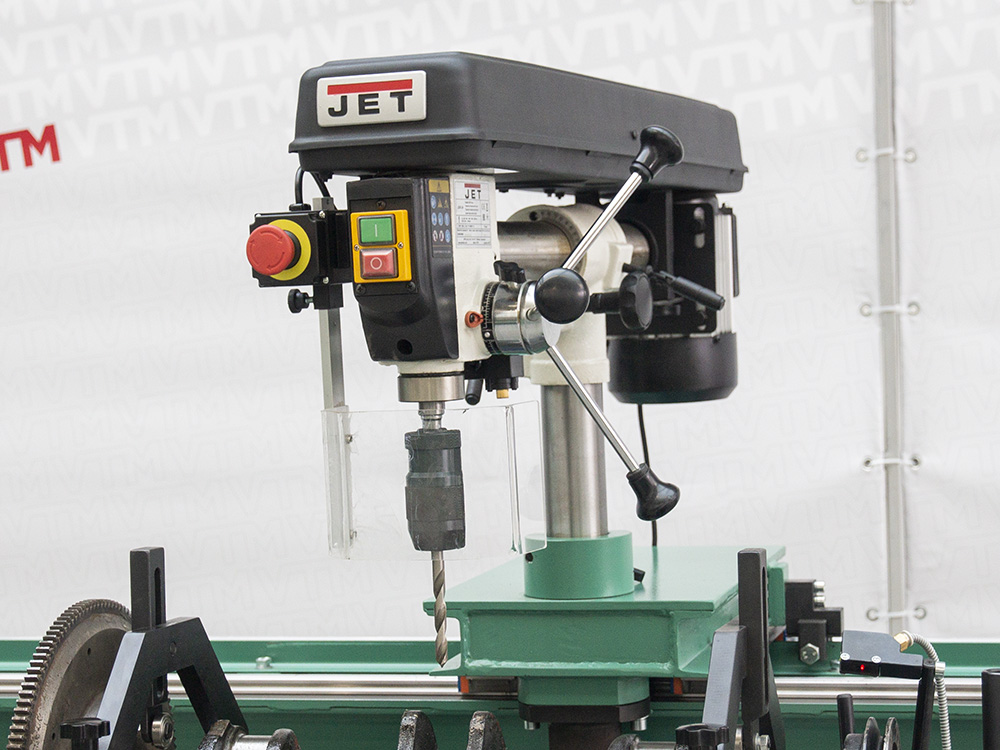
Drilling module
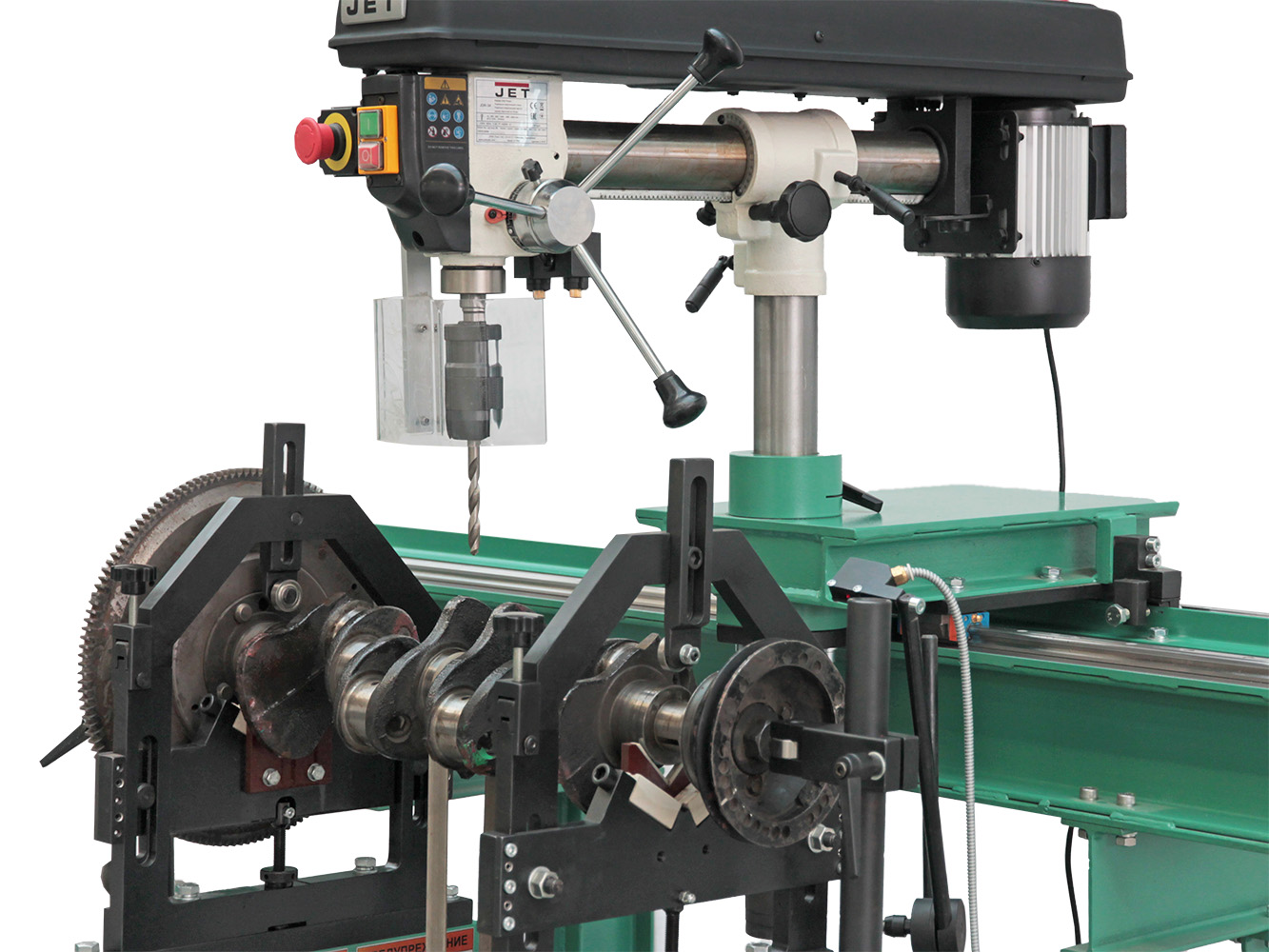
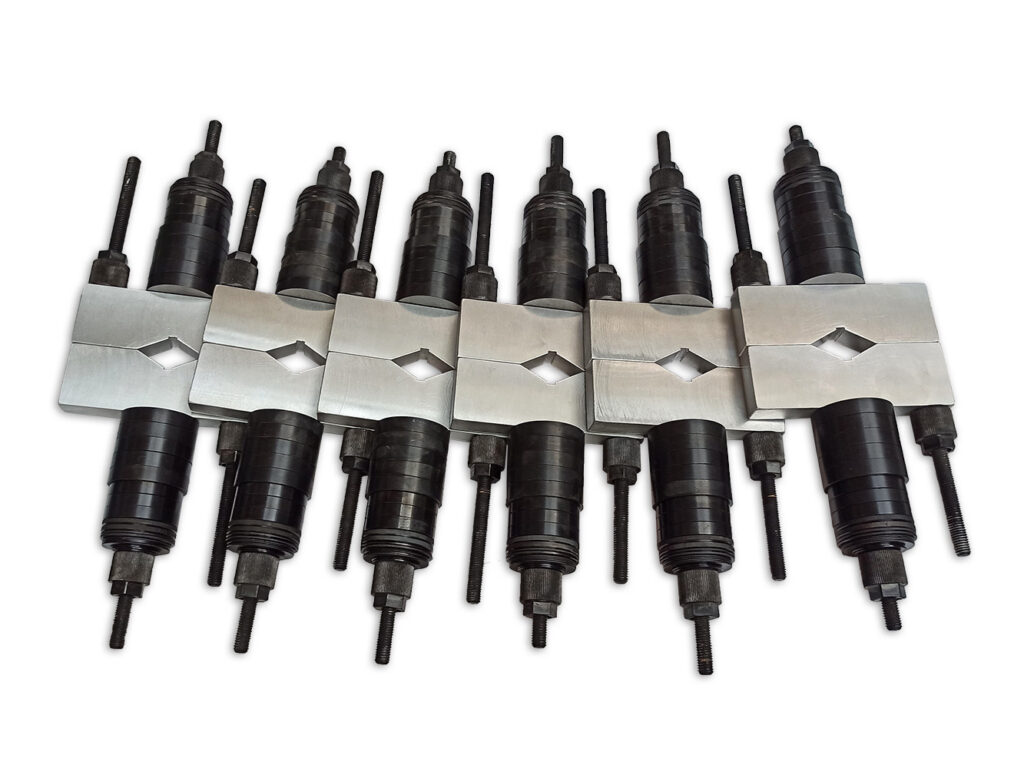
The drilling module, mounted on its own guides, is designed to eliminate rotor unbalance without removing it from the machine. This solution increases productivity by allowing corrections to be made…

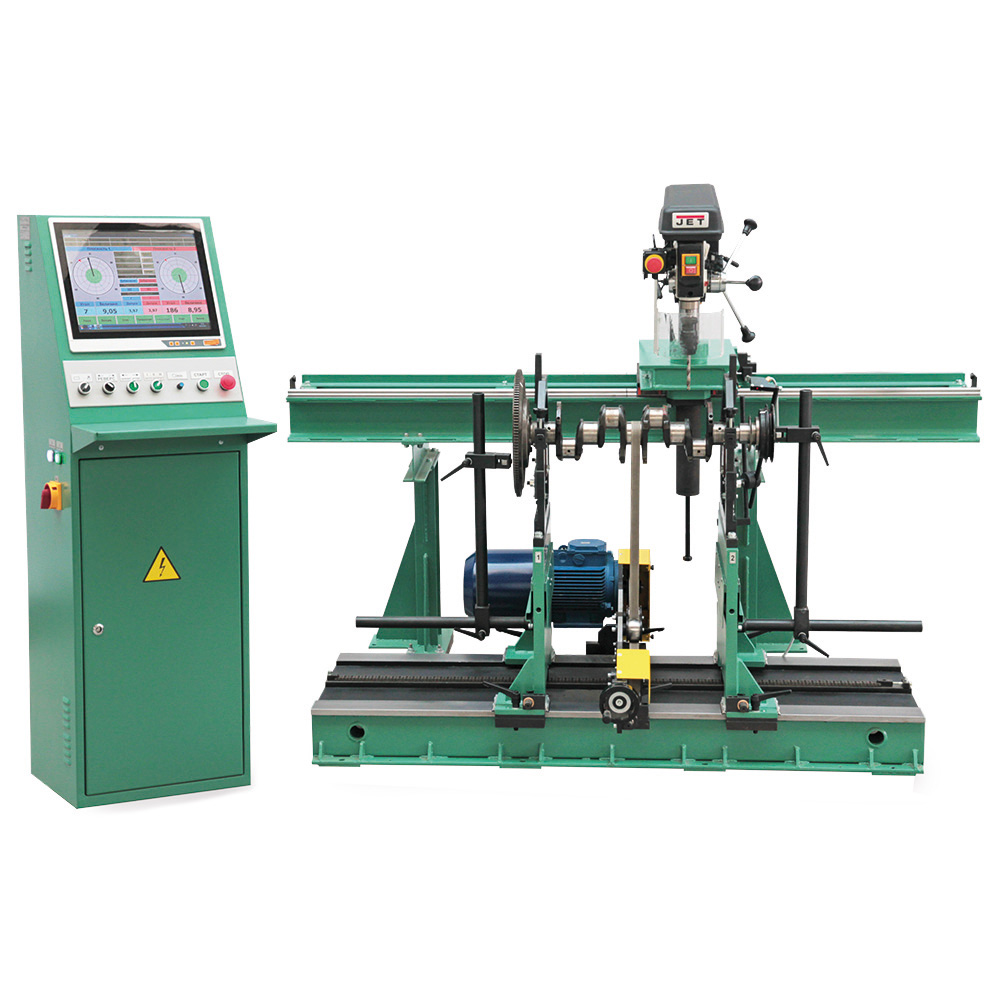
Crankshaft balancing machine up to 300 kg with integrated drilling module
Maximal weight, kg
Maximal diameter, mm
Maximum length, mm
The 9D715US machine has unique capabilities that allow it to effectively handle a wide range of crankshaft balancing tasks in engine overhaul shops.
Thanks to its innovative technology and high performance, it solves the following tasks:
With the 9D715US balancing machine you get a reliable and powerful tool for high accuracy and quality crankshaft balancing.
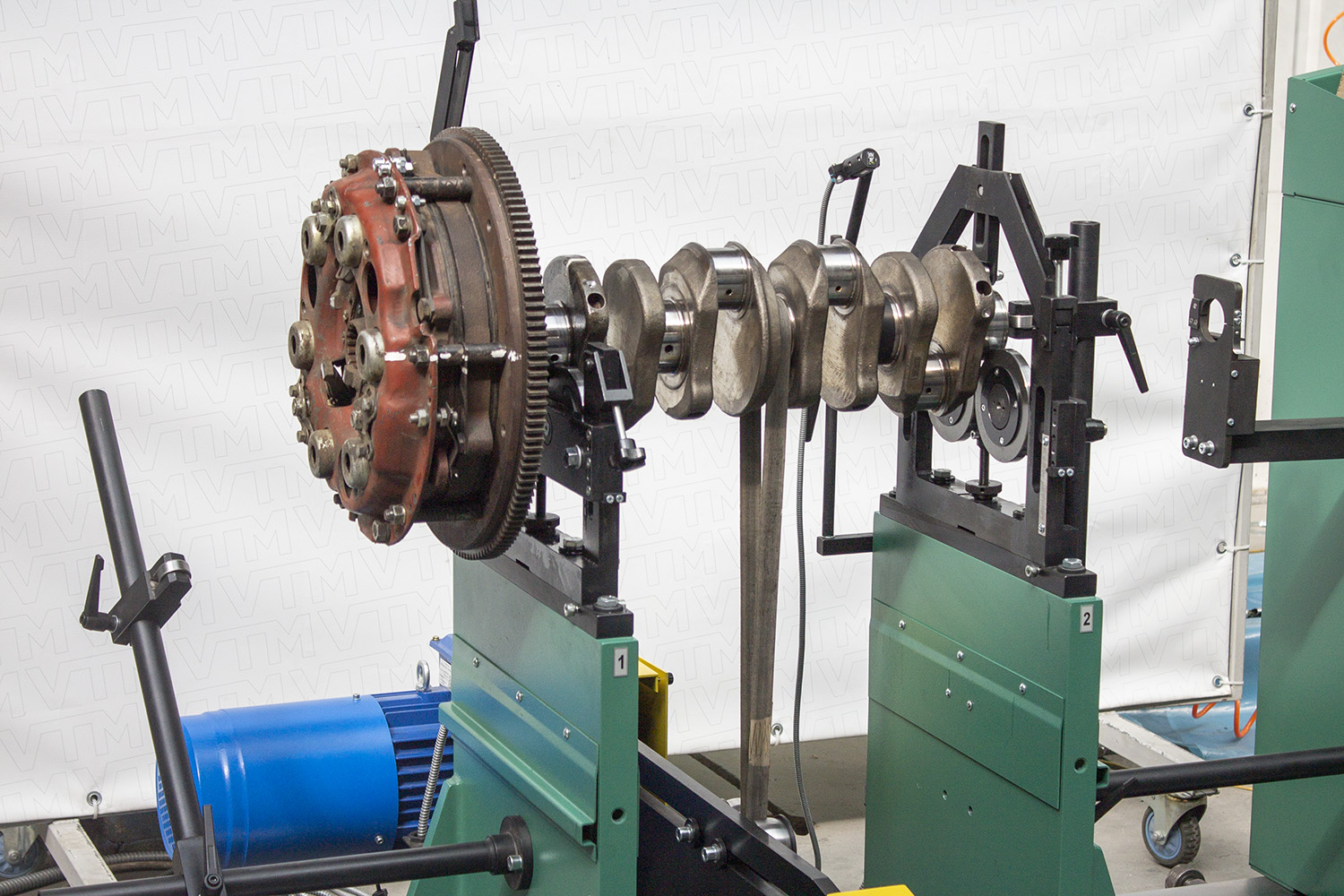
The universal balancing machine model 9D715US can handle these types of parts :
The unbalance is detected by means of force sensors located in the vibrating supports and a velocity sensor which monitors the rotation of the part. The force transducers convert the support vibrations caused by the unbalanced part into digital signals. The rotational frequency of the part is also converted into electrical pulses. The information from the sensors is processed by the balancer’s computing unit, then output in a convenient format to an information output device such as a computer or a microprocessor screen.
The PAK-1 unbalance measuring unit represents the latest generation of measuring complexes for dynamic balancing, combining high precision, stability, and ease of use. It’s designed to tackle a wide range of rotor balancing tasks, from simple to the most complex, requiring precise measurements.
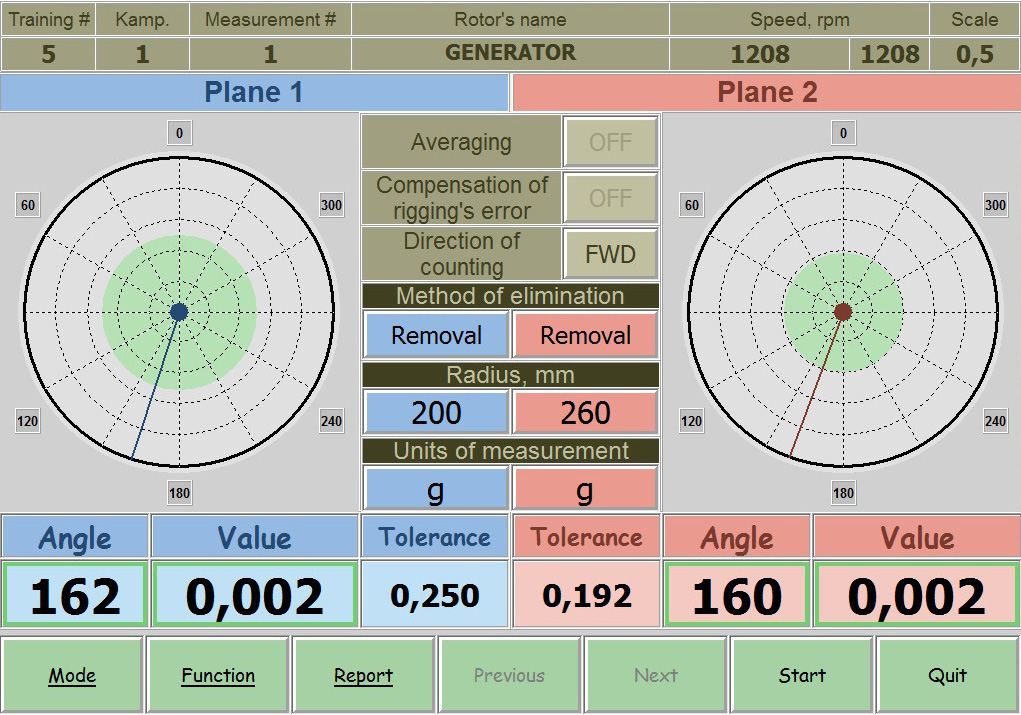
Based on an industrial fanless computer with a touchscreen and a multi-channel measuring unit, the system ensures reliability and a long service life, even under intensive use. The PAK-1 utilizes a universal measuring path and modern component base, allowing for equally high accuracy when working with all types of rotors.
Its intuitive interface, self-calibration capability, and automation of key operations make the complex a convenient tool for both experienced specialists and beginners.
|
Parameter |
Value |
|---|---|
|
Balancing rotors weight range, kg |
3 – 300 |
|
Maximum rotor diameter (over the bed), mm |
1100 |
|
Distance between rotor bearing journal centers, mm, min/max |
150 – 1350 |
|
Rotor bearin journals diameter, mm |
20 – 140 |
|
Machine type |
Hard-bearing |
|
Support type |
Rollers |
|
Minimal achievable residual specific unbalance, gmm/kg |
0.4 |
|
Rotor rotation speed range, rpm |
300 – 1500 |
|
Drive type |
Belt |
|
Electric motor power, kW |
2.2 |
|
Power supply parameters |
400V ± 10%, 3 Ph, 50Hz ± 1 |
|
Balancing system |
PAK-1 |
|
Overall machine dimensions (length x width x height), mm |
2100 x 1100 x 1500 |
|
Machine weight, kg |
450 |
Your questions — our technical solutions
The 9D715US machine is a specialized machining center optimized for the automotive and engine manufacturing industries. It is designed for balancing:
The integrated drilling module allows for mass correction (metal removal) directly on the machine without removing the part, which significantly speeds up the production cycle.
The machine is designed to handle crankshafts and other rotors weighing up to 300 kg. The hard-bearing design features high-rigidity supports, enabling precise measurement of the centrifugal forces generated during the rotation of heavy shafts. This ensures stable readings and high repeatability of results even under maximum load.
The standard bed configuration is designed to accommodate shafts up to 1,350 mm in length. This allows for the machining of virtually any crankshafts used in inline engines or heavy equipment.
However, based on the customer’s specifications, VTM Group can manufacture a machine with an extended bed.
Thanks to its hard-bearing system and highly sensitive pressure sensors, the 9D715US machine achieves a minimum residual specific unbalance of 0.4 g·mm/kg. This corresponds to accuracy class G2.5 according to ISO 21940, which exceeds the requirements for crankshafts in internal combustion engines.
Yes, the machine is set up for a new product type by the operator using trial runs with calibration weights.
This approach offers several key advantages for B2B production:
Maximum Sensitivity: Calibration allows adapting the measuring system to the specific geometry and mass of the rotor, minimizing error.
Accuracy Control: The operator can verify and confirm measurement accuracy at any time, eliminating the accumulation of errors during long-term operation.
Flexibility: The machine maintains reference-level accuracy even with non-standard or complex parts, as the system is tuned to the actual response of the specific rotor.
Leave a request and our manager will contact you to answer questions via your preferred messenger.