


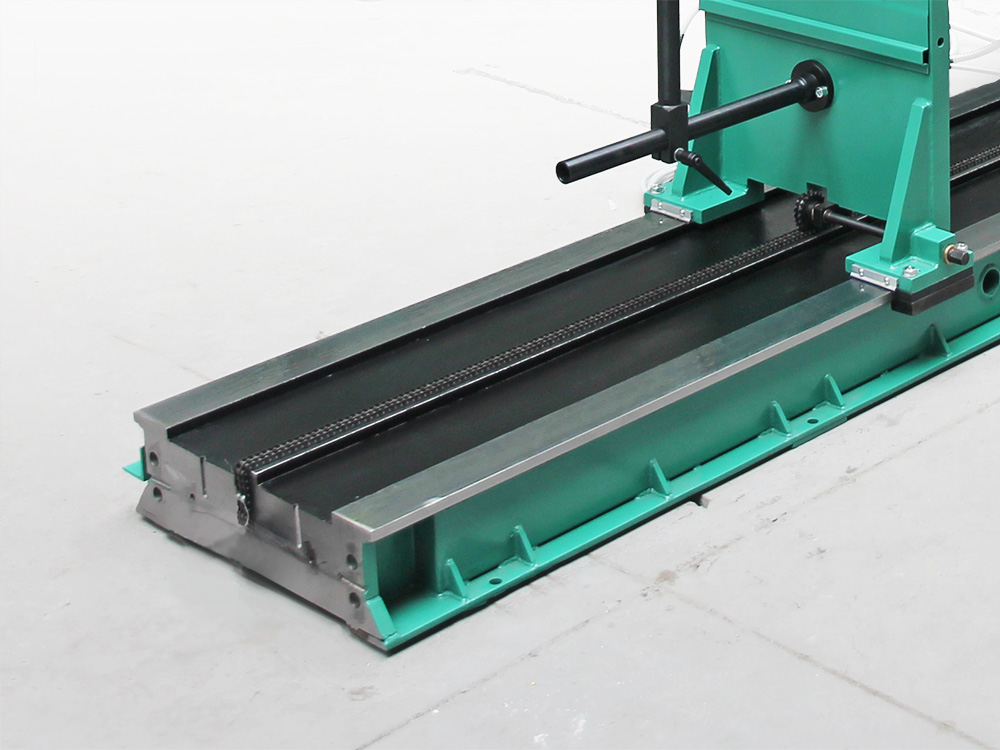
Extended machine base
On request, the machine can be manufactured with an extended bed, expanding its range of applications. This modification makes it possible to balance rotors of non-standard lengths.

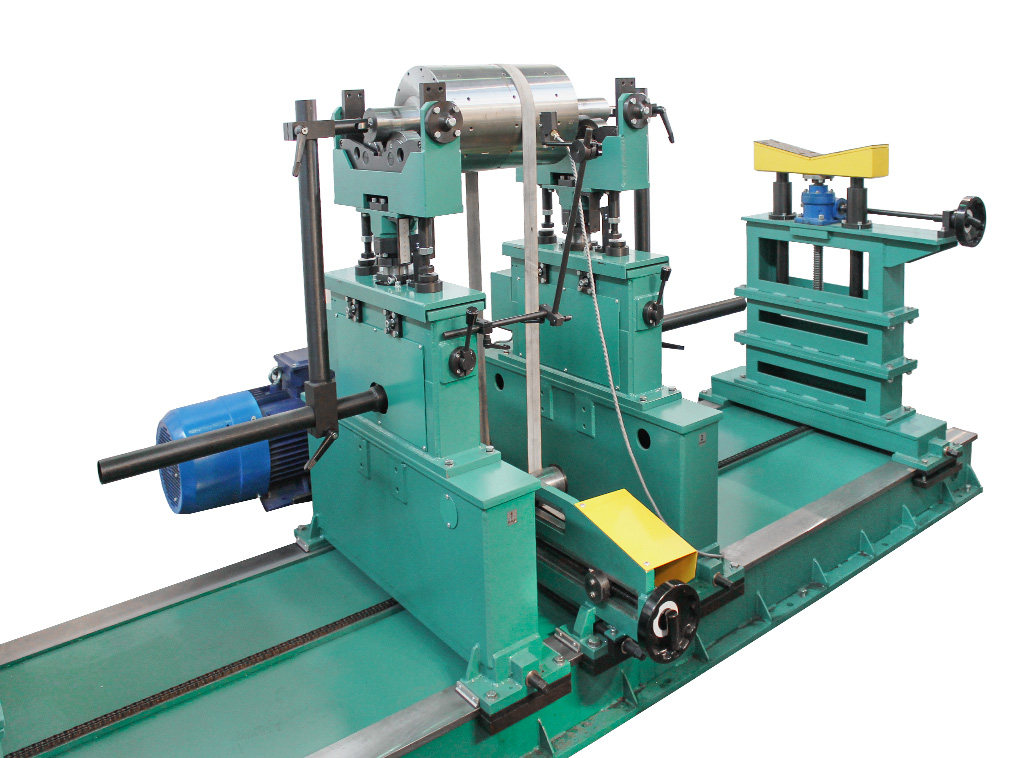
Soft-bearing balancer for heavy-weight rotors up to 3000 kg
Maximal weight, kg
Maximal diameter, mm
Maximum length, mm
The machine has high accuracy (0,4 gmm \ kg). Accuracy is achieved due to the special design of the spindle and the rig of the machine, as well as a reliable balancing system, PAK-1, which has a high degree of noise immunity. Ease of control allows you to quickly learn how to work on the machine and get to work as soon as possible. When designing the machine, high demands were placed on the functionality and versatility of each node, this made it possible to install absolutely any driveshaft on the machine with a minimum of time.
Characteristic features of soft bearing balancing machines:
The PAK-1 unbalance measuring unit represents the latest generation of measuring complexes for dynamic balancing, combining high precision, stability, and ease of use. It’s designed to tackle a wide range of rotor balancing tasks, from simple to the most complex, requiring precise measurements.
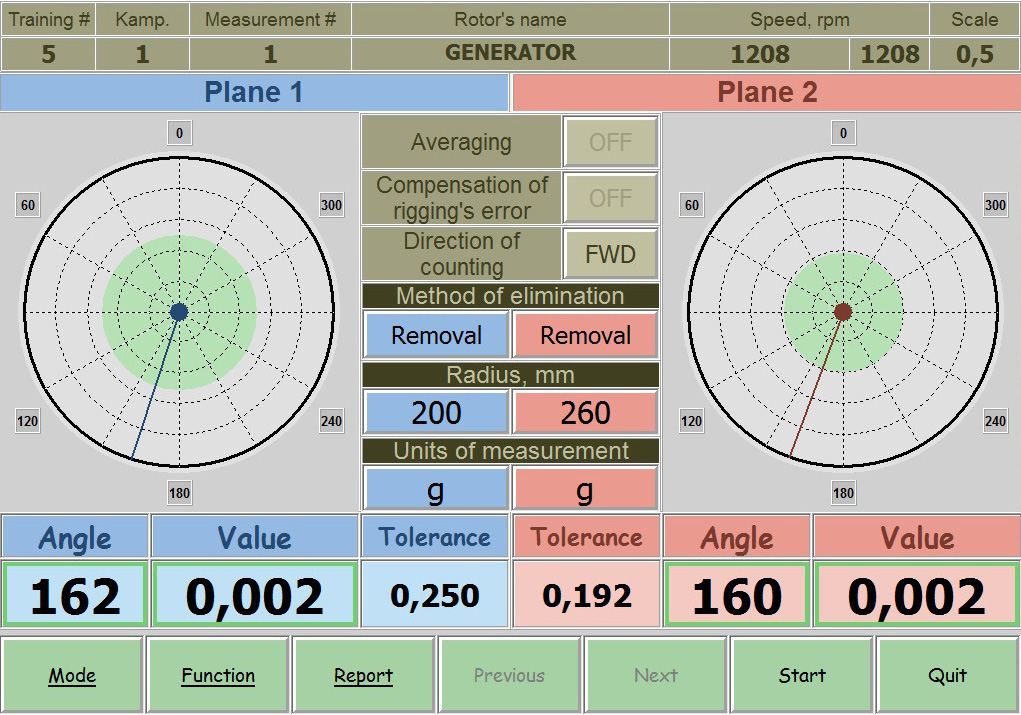
Based on an industrial fanless computer with a touchscreen and a multi-channel measuring unit, the system ensures reliability and a long service life, even under intensive use. The PAK-1 utilizes a universal measuring path and modern component base, allowing for equally high accuracy when working with all types of rotors.
Its intuitive interface, self-calibration capability, and automation of key operations make the complex a convenient tool for both experienced specialists and beginners.
|
Parameter |
Value |
|---|---|
|
Balancing rotors weight range, kg |
30 – 3000 |
|
Maximum rotor diameter (over the bed), mm |
2300 |
|
Distance between rotor bearing journal centers, mm, min/max |
350 – 3000 |
|
Rotor bearin journals diameter, mm |
20 – 400 |
|
Machine type |
Soft-bearing |
|
Support type |
Rollers |
|
Minimal achievable residual specific unbalance, gmm/kg |
0.4 |
|
Rotor rotation speed range, rpm |
300 – 1500 |
|
Drive type |
Belt |
|
Electric motor power, kW |
15 |
|
Power supply parameters |
400V ± 10%, 3 Ph, 50Hz ± 1 |
|
Balancing system |
PAK-1 |
|
Overall machine dimensions (length x width x height), mm |
5000 x 2000 x 1600 |
|
Machine weight, kg |
2500 |
Your questions — our technical solutions
The 9K718 machine is designed to handle heavy rotors across various industrial sectors. Thanks to its anti-resonance system with a soft lever-type suspension, it is the ideal solution for balancing:
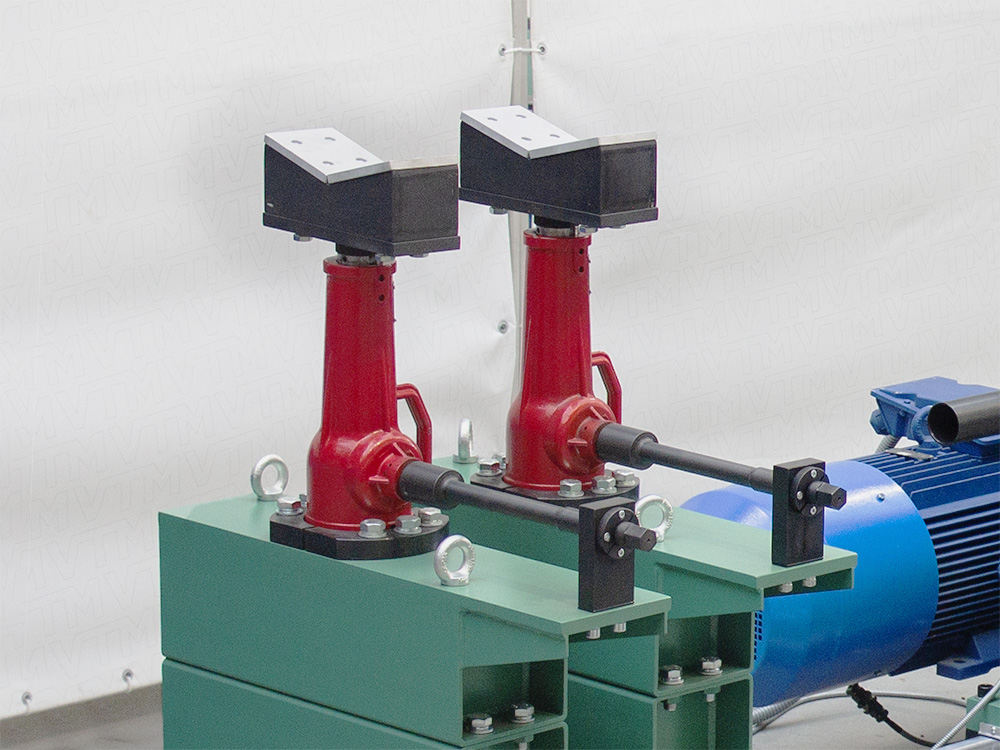
Self-aligning roller blocks allow for the reliable support of rotors with massive journals, preventing damage to their surfaces and ensuring measurement accuracy.
Yes, 3,000 kg is the maximum load capacity of this model. The frame and support column design of the 9K718 is specifically engineered to withstand the high static and dynamic loads associated with handling weights of this magnitude.
Self-aligning rollers ensure constant linear contact and prevent “scoring” on the rotor journals, which guarantees stability and high repeatability of balancing results.
The standard bed length is designed for standard industrial components; however, VTM Group often supplies this model in custom configurations. We can manufacture an extended bed version (over 3000 mm) for balancing long shafts. This modification makes it possible to balance rotors of non-standard lengths.
Despite its impressive load capacity, the 9K718 machine is classified as precision equipment. It achieves a minimum residual specific unbalance of 0.4 g·mm/kg, which corresponds to the highest accuracy class, G0.4, according to the international standard ISO 21940.
This is achieved thanks to the high quality of the lever suspension and the use of advanced microprocessor-based interference filtering systems, which effectively separate the useful imbalance signal from external vibrations.
Yes, the machine is set up for a new product type by the operator using trial runs with calibration weights.
This approach offers several key advantages for B2B production:
Maximum Sensitivity: Calibration allows adapting the measuring system to the specific geometry and mass of the rotor, minimizing error.
Accuracy Control: The operator can verify and confirm measurement accuracy at any time, eliminating the accumulation of errors during long-term operation.
Flexibility: The machine maintains reference-level accuracy even with non-standard or complex parts, as the system is tuned to the actual response of the specific rotor.
Leave a request and our manager will contact you to answer questions via your preferred messenger.